Nantou Ancient Town南头古城
Shenzhen's 1394 walled town, now lanes of temples, a museum, cafés and late bars
Nantou is the oldest piece of Shenzhen you can still walk around. An administrative seat was set up here in 331 AD, and the walled town you see today dates from 1394, when the Ming rebuilt it for coastal defence. From 1573 it was the seat of Xin'an County, which covered what is now Shenzhen and Hong Kong, so locals call it the root of Shenzhen, Hong Kong and Macao. The county seat only moved east to Shenzhen town in 1953.
For decades it was an urban village, with around 20,000 residents packed into roughly 0.07 sq km of Qing-era houses and later concrete blocks. The 2017 Bi-City Biennale of Urbanism and Architecture used the whole town as its main venue, and a renovation that finished around 2020 opened up the main streets. The result is a mix: restored temples and gates, a small history museum, and independent cafés, galleries and bars squeezed between homes where people still hang their washing.
It suits a slow afternoon or an evening out. Come in daylight for the history, then stay for dinner and drinks as the lanes light up. Remember it is a neighbourhood, not a theme park: the back alleys are people's front doors.
What to see and do
South Gate and the Ming walls
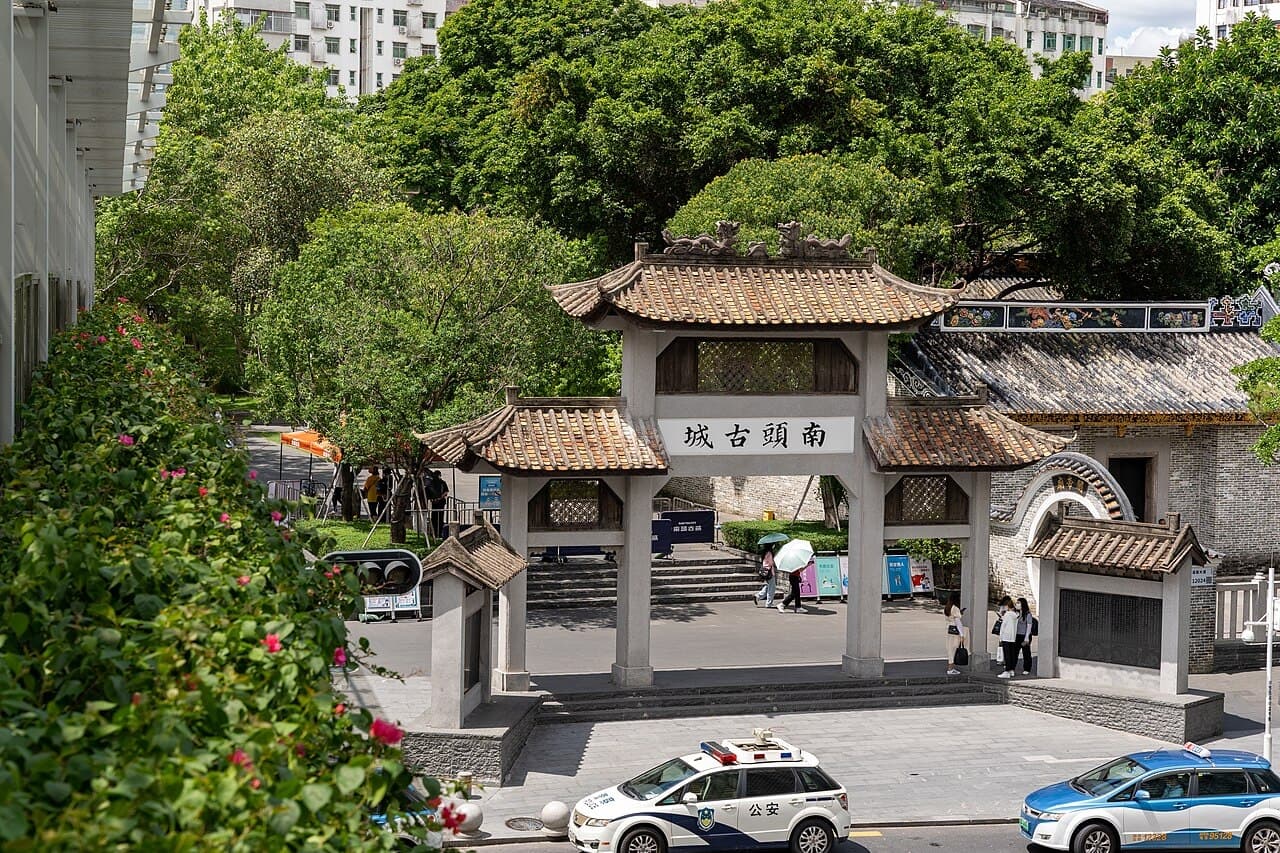
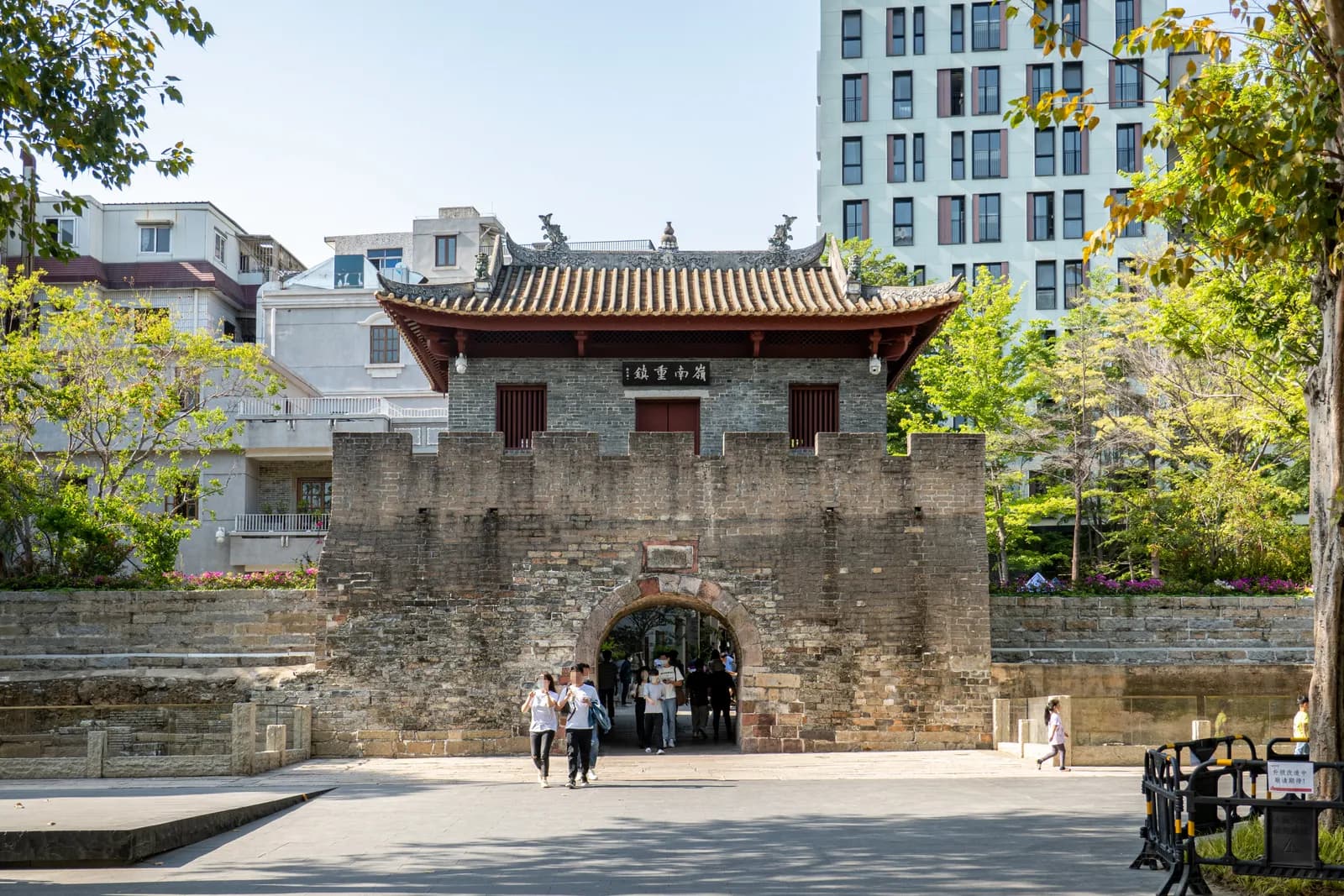
The stone South Gate, about 10 metres wide and 4.5 metres high, is the town's signature photo spot, with stretches of old wall either side. It faces Shennan Avenue, so most people enter here.
Nantou Ancient City Museum
A compact museum of about 630 square metres in the south-west of the town, with three halls and over 300 objects tracing local history from 331 AD. It is the quickest way to make sense of what you are walking through.
Guandi Temple
Just outside the South Gate on the east side, rebuilt in 1997. A good first stop before you head through the gate.
Xin'an County Yamen and the Wen Tianxiang hall
A reconstructed county government office shows how the town was run, and a Qing-era ancestral hall honours Wen Tianxiang, the Song loyalist who resisted the Yuan.
Cafés, bars and shops along the main streets
The renovated core is lined with independent coffee shops, design stores and small bars. Bars run late, which makes Nantou one of Nanshan's better evening walks.
Visiting
- Hours
- Streets open all day; shops, cafés and bars keep their own hours (Bendibao, 2026)
- Museum hours
- Nantou Ancient City Museum: 10:00-17:00, last entry 16:30, closed Mondays except public holidays (EyeShenzhen, 2023)
- Tickets
- Free entry to the town, no booking (Bendibao, 2026)
- Getting there
- Metro Line 12 to Nantou Ancient City station, Exit C (north side of Shennan Avenue, by the Guandi Temple and museum)
- Address
- Junction of Nanshan Avenue and Shennan Avenue, Nanshan District (南山大道与深南大道交叉口)
- Time needed
- 2-3 hours, longer if you stay for dinner and drinks
- Use Exit C at Nantou Ancient City station. Exit A comes up on the east side of Nanshan Avenue near Lixiang Park, the wrong side for the town.
- If the museum is on your list, avoid Mondays and arrive before 16:30.
- Seasonal markets, temple fairs and lantern displays run around Spring Festival, Mid-Autumn and National Day. The official WeChat account posts the line-up.
- Nanshan Museum, Nanshan Library and the Nanshan Cultural and Sports Centre sit on the other side of Nanshan Avenue (Exits E1 and E2), handy if it rains.
FAQ
Is Nantou Ancient Town free?
Yes. The streets are free and open all day with no booking. You only pay in the shops, cafés and any paid exhibitions.
Which metro exit is closest to Nantou Ancient Town?
Nantou Ancient City station on Line 12, Exit C. It comes up on the north side of Shennan Avenue next to the Guandi Temple and the South Gate.
How old is Nantou Ancient Town?
The site has been an administrative centre since 331 AD. The current walled town was built in 1394 and served as the Xin'an County seat from 1573 until 1953.
Is Nantou Ancient Town worth visiting at night?
Yes. Most cafés and shops open from mid-morning, and the bars stay open late, so an evening visit with dinner works well.
Sources: Nantou Ancient City official site: service centre and transport (2026) · Bendibao: Nantou Ancient City visitor page, hours and admission (2026) · Bendibao: Nantou Ancient City station exits (Nov 2022) · EyeShenzhen: Nantou Ancient City Museum (May 2023) · Wikipedia: Nantou (historic town), background · Wikipedia: Nantou Ancient City station, exits · Wallpaper*: 2017 Bi-City Biennale at Nantou · checked 2026-10-04